Your legal duty
Employers must assess risks to employees, including those working alone, and put controls in place. HSE guidance on lone working expects you to keep in touch with lone workers, have a way for them to raise the alarm, and know what to do when they don't respond.
How often to check
Base it on the risk assessment for each site: hourly is common for static night guarding; higher-risk sites may need every 30 minutes; a busy daytime reception may need fewer. Write the interval into the site instructions.
When a check call is missed
- Try the guard straight away by phone
- Try the site contact or a nearby guard
- Escalate to a manager after a set time (for example 5 minutes), then the owner
- Send a mobile patrol or, if you believe someone is at risk, call the police
- Record what happened and the outcome
Make it automatic
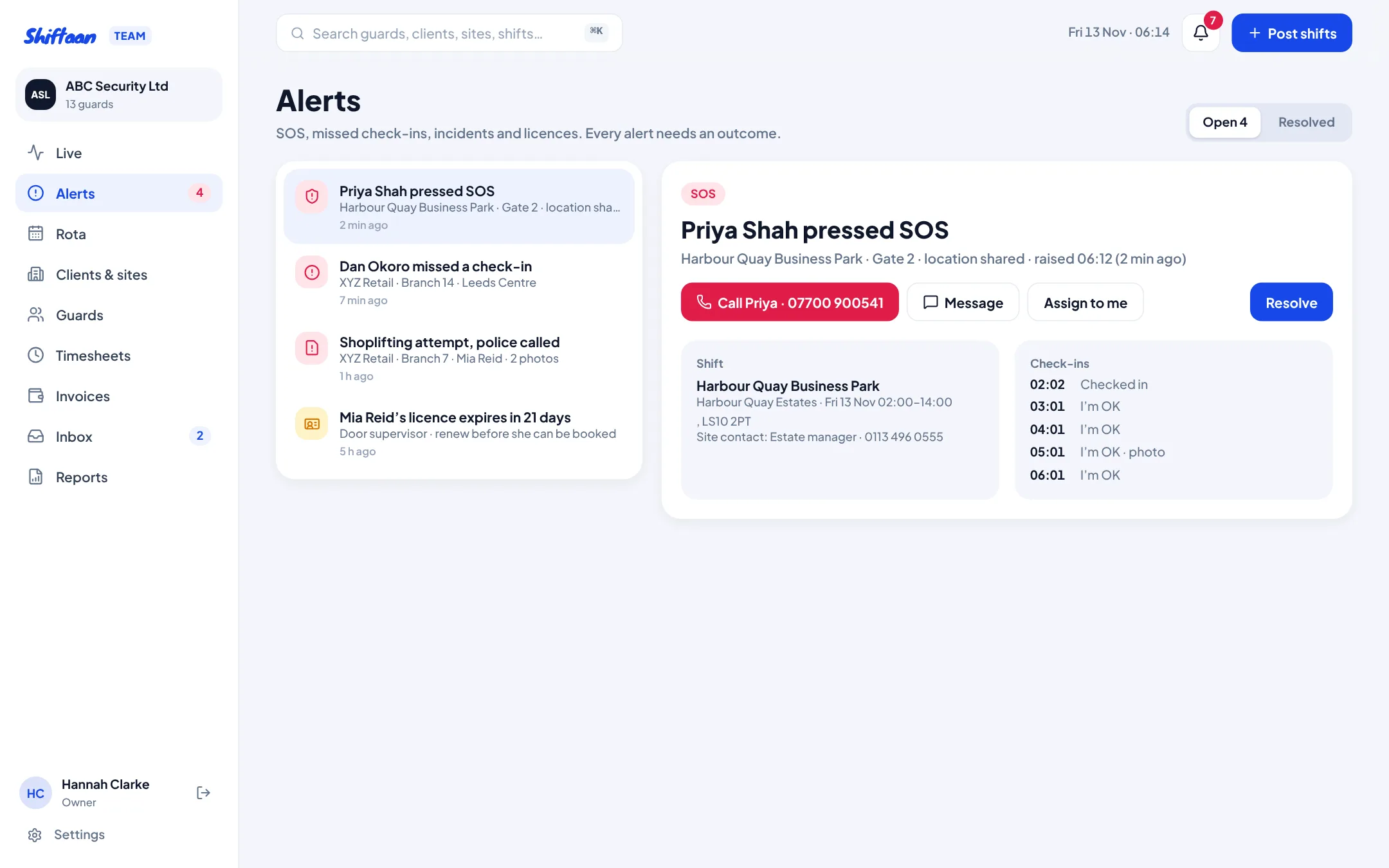
Manual call-rounds fail when the office is busy. In Shiftaan Team the guard taps “I'm OK” in the app, a missed call raises an alert after 10 minutes, and alerts escalate to managers and the owner until someone takes it. Every check-in and outcome is kept.